The Courage to Break Boundaries: The Past, Present, and Future of Taiwan's Experimental Education
Have you ever thought that education has other possibilities beyond sitting in rows and memorizing textbooks? In Taiwan, there is a group of educational pioneers who, over half a century, have paved a path for children called "experimentation."
1. From the 'Mandarin Experiment' to 'The Liberation of Man'
The starting point of experimental education in Taiwan actually started earlier than imagined.
- Policy Experiment Period: In 1940 , Taipei Mandarin Experimental Elementary School was established, making it one of Taiwan's first experimental schools. The Zhuyin symbol teaching method we are familiar with today was only promoted nationwide after the experiment succeeded there.
- System Reflection Period: By the 1980s and 1990s , pioneers of private offices began to emerge. Teacher Chen Qingzhi called for the Taiwanese version of "Xiashan School," the Humanistic Education Foundation to establish "Forest Elementary School," and Teacher Li Yaqing to establish "Seed Practical Primary School."
These pioneers have only one core mission: to resist rigidity and practice student-centered autonomous learning.
2. Three Experimental Education Methods: Give Children a Legal Opportunity to 'Become Stronger.'
This grassroots energy ultimately drove legal reform. In 2014 , the government officially passed the 'Three Experimental Education Laws,' formally legalizing teaching outside the system.
Currently, experimental education in Taiwan is mainly divided into two categories:
- School type: The entire school is experimental in nature.
- Non-school type: includes individuals (self-study), groups, and 'institutions.'
This shift aims to encourage educational innovation, making "adaptive learning" no longer just a slogan but a genuine choice for parents.
3. Why does experimental education not require 'teacher trainees'?
This is a common misconception. In fact, the legislative basis for the three Experimental Laws referenced Darwin's theory of "biodiversity." If all teachers received the same training and used the same teaching materials, how would the children they raise cope with a changing future?
"Diversity is the vitality of society." Experimental education allows independent training of teachers and self-compiled teaching materials precisely to attract talents with diverse practical backgrounds, making teaching more closely related to the real world.
4. Vivaldy: The Last Urban Oasis in Taipei and New Taipei
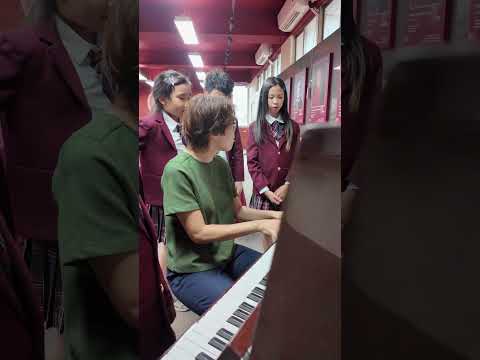
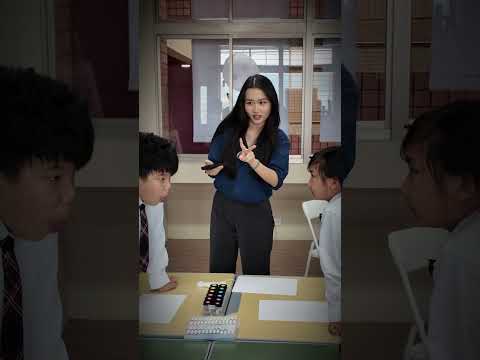
In this historical context, the Vivaldi International Experimental Education Organization was established. We belong to the "non-school type (institution)," but we look further ahead:
- Cross-dimensional enlightenment: We combine "musical enlightenment" with "all-English instruction," cultivating linguistic intuition through the interweaving of emotion and reason.
- The Vitality of the AI Wave: When technology is replaced, human value lies in "physical strength, emotion, and creativity." These three key elements are the core of the Vivaldi curriculum and the toughest moat for children in the AI era.
We provide children from grades 1 to 6 with a space to grow with an international perspective and humanistic literacy.
If you are also looking for an educational environment that balances "innovative practice" with "character development," Vivaldi will be the most beautiful oasis you find for your child in the bustling city.