What parents are truly seeking is a learning path tailored to their child.
Some children struggle with a fixed learning pace, while others crave more room for expression and exploration. Many families also hope that, beyond academics, their children can simultaneously develop language, arts, bodily awareness, and self-management skills. These needs prompt parents to ask: Are there other educational options besides traditional schools?
The value of experimental education lies not merely in being "different from regular schools," but in allowing education to be tailored—designing more suitable learning arrangements based on a child's unique traits, learning pace, and developmental needs.
Experimental Education is Not a Trendy Buzzword; It's a Response to Children's Learning
Differences Experimental education in Taiwan is not a concept that has only emerged in recent years. From early teaching experiments within the traditional school system to diverse grassroots educational practices like Forest Primary School and Seedling Experimental School, they all reflect the same question: When a child does not perfectly fit a singular curriculum pace, standardized assessment, or fixed teaching method, can education offer more possibilities?
Therefore, experimental education exists for more than just "breaking the mold." More importantly, it compels school founders, educators, and parents to rethink: What kind of learning environment does a child need? Can schools find a better balance between academics, daily life, exploration, and character development?
For parents, understanding experimental education doesn't require memorizing the full history of educational reform. Instead, it starts with recognizing the core issue it addresses: Can education align more closely with children's individual differences and rhythms of growth?
The Three Acts for Experimental Education: Providing a Clearer Institutional Foundation for Diverse Education
In 2014, the promulgation of Taiwan's "Three Acts for Experimental Education" established a clearer legal foundation for various forms of experimental education. This means experimental education is not an unregulated form of schooling. Instead, within a defined institutional framework, it allows schools or educational institutes to develop curriculum designs and learning arrangements that differ from mainstream schools.
Currently, experimental education can be broadly categorized into several types, such as school-based experimental education, publicly-owned and privately-operated experimental education, and non-school-based experimental education.
Among these, non-school-based experimental education is further divided into individual, group, and institutional forms. For parents, these categories are more than just legal terms; they serve as a foundation for understanding different educational choices. Some children thrive in a complete school system, while others may require more flexible curriculum arrangements, learning paces, and forms of guidance.
In other words, regulations provide the possibility; what truly matters is how educators on the ground respond to the needs
of the children. Beyond Legal Compliance, Experimental Education Must Answer the "Why"
The existence of an experimental education institution should not be understood merely as being established because the law allows it. Crucially, it stems from the founders recognizing specific needs in children and choosing the experimental education model to address them.
If it is simply renaming the curriculum of a regular school, experimental education loses its meaning. What truly deserves parents' attention is whether an institution can clearly articulate its educational philosophy, curriculum arrangement, teacher support, and learning methodologies.
For example:
- Can children build foundational skills at a pace that suits them?
- Does the curriculum value expression, exploration, and collaboration as much as knowledge input?
- Can teachers observe the children's learning states and provide appropriate guidance?
- Can the school help parents understand how their child is growing, rather than just offering beautiful philosophical rhetoric? These questions are likely
the true focal points parents need to consider when evaluating experimental education.
How Does Vivaldi Respond to Children's Learning Needs Through Experimental Education?
As experimental education in Taiwan has gradually developed diverse models, parents have more opportunities to choose different learning environments based on their child's traits.
Vivaldi International Experimental Education Institution was established against this institutional backdrop, striving to provide primary school-aged children with a learning arrangement that integrates core academics, immersive English environments, music education, and personalized support.
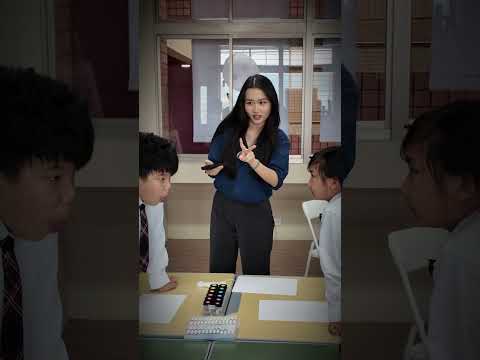
Vivaldi chose the experimental education model not just for institutional flexibility, but to preserve more space for observation, guidance, and adjustment in a child's daily learning. Rather than being assessed against a single, standardized timeline, children can discover their own capabilities, interests, and learning rhythms through diverse courses and activities.
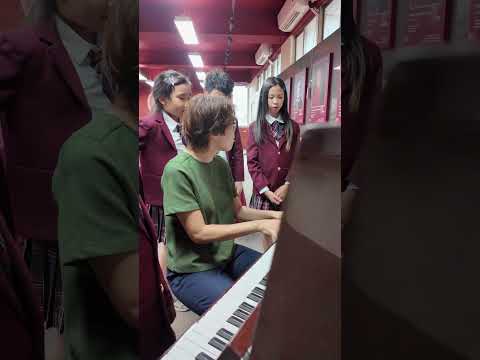
In Vivaldi's learning design, music is not just an extracurricular talent, English is not just a subject, and physical activity is not just a period on the schedule. Together, they constitute the daily learning environment children experience, allowing them to progressively build skills across language, sensation, focus, expression, collaboration, and bodily experience.
This is how Vivaldi understands experimental education: not by making grandiose claims about what a child will become, but by accompanying them through daily classes and interactions to gradually find the learning style that suits them best.
Choosing Experimental Education Ultimately Returns to the Child Understanding the history and institutions of experimental education helps parents realize that it is a grounded, evidence-based educational form. However, the true choice always comes back to the child.
Does the child
need a more flexible learning pace?
Is the child suited to practice autonomy and expression under guidance?
Can the family accept that the child may need a period of time to adapt to a new way of learning?
Are the parents willing to observe the child's changes alongside the school, rather than judging learning outcomes solely by short-term grades?
These questions are far more important than simply knowing the names or classifications of experimental education.
For families currently seeking a learning environment for their children, experimental education is not a guaranteed "better" answer, but rather an educational choice that requires deep understanding. Only when parents can simultaneously understand the system, the educational philosophy, and their child's state will they be better equipped to judge whether this learning approach is truly suitable for their child.
The Core of Experimental Education: Bringing Education Closer to the Child
The focus of experimental education is not merely to be different from mainstream schools, nor does it lie in historical background or high-minded philosophy. Its true significance is providing education the opportunity to draw closer to the child's learning needs.
For Vivaldi, experimental education is not simply about breaking out of the box. Instead, within the space permitted by the system, it is about accompanying children—through music, English, core academics, physical fitness, and daily life interactions—to build foundational skills and gradually come to know themselves.
Only when education stops pursuing a single standard answer will children have the opportunity to slowly forge their own learning rhythm within a process of being understood, guided, and supported.