When it comes to bilingual schools, many parents immediately think of an English-speaking environment. Indeed, one of the primary goals of bilingual education is to allow children to experience English not only in language classes but also to use it naturally in art, physical education, daily life, or other subjects.
However, bilingual education itself is mostly a teaching method or a direction in curriculum design. The focus is on how to increase language exposure and practical usage scenarios. In such an environment, children can accumulate English comprehension and expression experience through their daily classes.
Experimental education, on the other hand, goes beyond discussing "what language to use in class." It takes a step further to ask: How do children learn? How is the curriculum arranged? Can assessments be more flexible? Can differences in children's interests, learning paces, and abilities be observed more closely?
Therefore, when comparing the two, parents might first try to understand them on different levels:
Comparison Aspect | Bilingual Schools / Bilingual Education | Experimental Education |
Core Focus | Increasing English usage scenarios and integrating English into the curriculum. | Designing learning methods and curriculum structures based on educational philosophies. |
Curriculum Arrangement | Most still follow established curriculum guidelines and traditional school systems. | Can develop more flexible curricula and assessments within legal boundaries. |
Learning Objectives | Strengthening language exposure and usage opportunities. | Supporting children's growth in academics, exploration, expression, autonomy, and personalized development. |
Suitable Families | Families who value an English environment but also wish to retain a familiar school system. | Families who value their child's unique traits, learning pace, and the development of diverse abilities. |
What Parents Should Notice | Whether there are genuine language usage scenarios, rather than just an increase in English classes. | Whether the school's philosophy, curriculum arrangement, transition planning, and required family cooperation are clear. |
In other words, bilingual education primarily answers the question, "How does English enter a child's learning life?" Experimental education, however, places more emphasis on "How is the child understood and supported within a complete learning environment?"
Before choosing experimental education, clarify what your child truly needs
Many parents begin considering experimental education because their children face maladaptation in their original learning environments. It could be that the learning pace is too rigid, the assessment methods are too uniform, or the child's interests, personality, or ways of expression are not fully recognized in the existing system.
But experimental education does not mean "no studying," nor is it an idealized environment completely free of pressure or interpersonal friction. It is better understood as a way of redesigning the learning environment: allowing children, through more suitable guidance, to rebuild their learning motivation, expressive abilities, and self-awareness.
Therefore, before choosing experimental education, parents can ask themselves a few questions:
- Are the difficulties the child is currently facing due to a mismatched learning pace or a lack of learning motivation?
- Does the child need fewer demands, or a guidance method more suited to them?
- Is the family expecting short-term grade improvements, or the long-term development of the child's abilities?
- Is the child willing to practice expression, exploration, and self-management in a new environment?
- Are the parents willing to maintain communication with the school and accompany the child through the adaptation process?
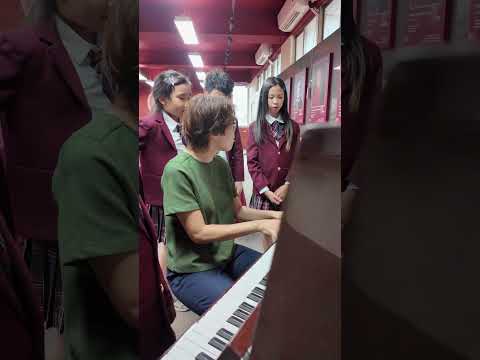
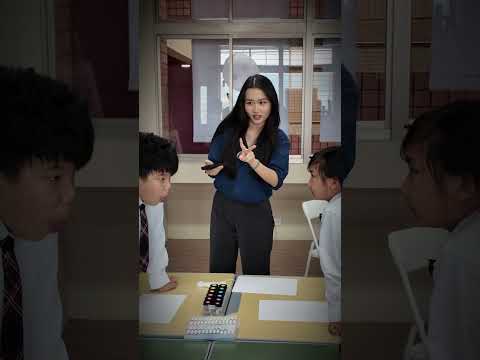
Taking Vivaldi as an example, the school emphasizes the parallel development of core subjects, specialized courses, and personalized support. Through rotating classrooms and utilizing different learning spaces, the school helps children find their own rhythm across different tasks. The focus here is not on lowering academic expectations, but on allowing children, through appropriate support, to gradually build the experience of "I can learn, I am willing to learn, and I know how I learn."
Beyond language classes: Can the language still be used naturally?
If a family values their child's English proficiency, a bilingual school is naturally an option that easily comes to mind. However, parents can observe further: is the child's exposure to English concentrated purely in English classes and exam performance, or can they use it naturally in daily interactions, classroom activities, and real-life scenarios?
The key to language learning is not just how many English classes are taken, but whether the child has enough opportunities to understand, respond, and express themselves. When English becomes a communication tool in daily life, rather than just a subject for memorization and test-taking, it is much easier for children to build a sense of the language and confidence in using it.
If an experimental education institution provides a good English environment, it can also naturally integrate the language into a child's daily learning. For example, during teacher-student greetings, classroom interactions, thematic activities, or cross-disciplinary learning, children slowly get used to understanding messages and expressing ideas in English, rather than only encountering English in specific textbooks.
Vivaldi values an English environment, but does not view English as the sole objective. Language should be a tool for children to explore the world, not another form of academic pressure. Only when English, music, academic subjects, and life experiences intertwine can children have the opportunity to gradually accumulate comprehension and expressive skills in a more natural setting.
Experimental education looks beyond the present; it also considers future academic transitions
When choosing an educational environment for the primary school years, parents care not only about whether the child is happy now but also whether they can smoothly transition in the future. This is a very pragmatic and highly necessary question.
Experimental education emphasizes flexibility and personalized learning, but this does not mean fundamental academic subjects, study habits, and long-term planning can be ignored. Children might return to the standard public school system in the future, or they might transition to private schools, other specialized programs, or more internationalized learning paths. Different directions all require a stable academic foundation, language proficiency, and self-management skills.
Therefore, when evaluating experimental education, parents should observe whether the school can clearly explain:
- How are core subjects arranged?
- How is English learning implemented in daily life and the curriculum?
- How is the child's learning progress observed and given feedback?
- How does the school help children build self-management and study habits?
- If the child needs to transition to a different educational path in the future, does the school retain enough flexibility?
For Vivaldi, the curriculum planning is not just about keeping children at the stage of exploration and interest; rather, it hopes to strike a balance between core subjects, English environments, music education, and diverse courses. Children can gradually accumulate the basic skills needed for future transitions while maintaining their interest in learning.
Cost is not the only standard, but clearly understand the learning support provided
Experimental education usually requires higher costs for manpower, curriculum design, and environmental setups, so tuition is indeed a factor parents must pragmatically evaluate. Rather than simply comparing prices, it is more important to understand what learning support the fees cover.
For example, does the school provide more nuanced teacher-student interactions? Is there enough curriculum flexibility? Are the child's needs in language, arts, physical education, academics, and daily care comprehensively arranged? When a child faces adaptation difficulties, does the school have the capacity to observe, communicate, and adjust alongside the parents?
These questions are often closer to the core of the educational choice than simply asking if the tuition is high or low.
For Vivaldi, music, English, core subjects, and diverse specialized courses are not isolated arrangements, but are intended to jointly construct the child's daily learning experience. When evaluating, parents can further understand the curriculum content, teacher arrangements, learning support, and campus life to judge whether this educational investment matches the child's needs and the family's expectations.
Is the child ready to practice autonomy under guidance?
Experimental education is often linked to autonomous learning, but autonomy does not equal a laissez-faire approach. For primary school-aged children, autonomy needs to be guided and practiced step by step in a stable environment.
If a child is merely expecting less homework and fewer challenges, experimental education may not solve the underlying problems. What truly needs to be observed is: Is the child willing to attempt expression under a teacher's guidance? Are they willing to participate in exploration and collaboration? Can they gradually learn to manage their time, emotions, and tasks?
Parents also need to understand that changing educational environments will not instantly solve all problems. After entering a new learning model, a child may still need to adapt to a new pace, new relationships, and new expectations. At this time, communication between the family and the school is crucial.
Vivaldi values personalized support and diverse exploration, but this does not mean there are no academic expectations. Conversely, children will gradually recognize their strengths and see areas where they need to work harder through music, language, academics, physical education, and team activities. When a child can practice making choices, taking responsibility, and making adjustments with support, learning will slowly shift from an external requirement to an internal motivation.
Experimental education is not a cram school, but a comprehensive learning arrangement
Some parents ask: Is experimental education just another form of cram school?
The essence of the two is actually quite different. Cram schools usually focus on strengthening specific subjects, exam goals, or short-term grades, with the focus mostly on compensating for a specific skill or improving a specific performance. Experimental education, however, is the child's primary learning arena. It focuses not just on grades in a single subject, but on the child's overall growth across academics, daily life, exploration, expression, and interpersonal interactions.
Therefore, experimental education cannot be judged solely by "how many classes there are" or "how rich the extracurriculars are." What truly matters is whether these courses are interconnected. Does the school have a clear educational philosophy? How do teachers observe the children? How do children practice thinking, expressing, collaborating, and self-managing in their daily lives?
For Vivaldi, experimental education is not about replacing academic pressure with extracurricular activities, nor is it merely packaging the curriculum with English or music. The school hopes to accompany children in building a more complete learning experience through core subjects, English environments, music education, and personalized guidance.
How does Vivaldi respond to parents' expectations of experimental education?
Returning to the question parents care about most: How should one choose between experimental education and bilingual schools? The answer does not actually lie in which educational model is absolutely better, but in what kind of learning environment the child needs.
If a family prioritizes English exposure and language usage scenarios, bilingual education offers a clear direction. If parents further hope their child will grow through curriculum flexibility, personalized support, musical and artistic cultivation, exploratory skills, and self-awareness, then experimental education is worth deeper consideration.
What Vivaldi hopes to provide is a learning environment where children explore with support, use language in daily life, and build connections between music and academic subjects. Children do not just absorb knowledge in the classroom; they also practice expression, collaboration, focus, feeling, and thinking throughout the rhythm of their day.
Choosing a school is not about finding the seemingly most perfect answer for the child, but about finding an environment where they can gradually grow. When parents are willing to think holistically based on the child's traits, family expectations, and future transitions, they can better see the true differences behind various educational choices.
If you are currently evaluating whether experimental education is right for your child, you are welcome to further understand a day at Vivaldi, our curriculum arrangements, and the application process. By looking at the campus life the child will actually experience, you can judge whether this learning method meets your child's growth needs.