Mathematics Curriculum
U.S. Common Core State Standards for Mathematics (CCSS-M)
This program is a primary school mathematics curriculum designed around the framework of the U.S. Common Core State Standards for Mathematics (CCSS-M).
Its core philosophy is built upon three pillars: Focus, Coherence, and Rigor, emphasizing that students must not only compute accurately but also deeply understand the conceptual logic behind the mathematics.
Primary School Math Curriculum Overview (G1-G6)
Phase 1: Number Sense & Foundational Operations (Grade 1 – Grade 2)
Core Objectives: Establish robust Number Sense, understand the base-10 system, and master addition and subtraction within 100.
Curriculum Content:
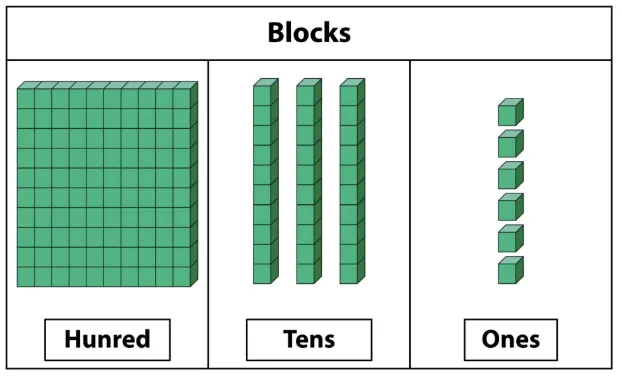
- G1: Addition and subtraction within 20 (including regrouping), understanding the concept of "tens," and measuring length.
- G2: Operations within 100, money calculations, identifying 3D shapes, and basic time-telling.
- Expected Outcomes: Students can intuitively decompose numbers (e.g., 7 + 8 = 7 + 3 + 5) and use mathematical language to confidently explain the process of addition and subtraction.
Phase 2: Multiplicative Logic & Introduction to Fractions (Grade 3 – Grade 4)
Core Objectives: Transition from additive to multiplicative thinking, understand the concept of area, and begin exploring the world of "non-whole numbers."
Curriculum Content:
- G3: Fluency in multiplication tables (up to 9x9), understanding division as the inverse operation of multiplication, locating fractions on a number line, area, and perimeter.
- G4: Multi-digit multiplication and division (using standard algorithms), conversion of Equivalent Fractions, angle measurement, and multi-step word problems.
- Expected Outcomes: Students can flexibly apply the Distributive Property for mental math and solve complex, real-world mathematical problems.
Phase 3: Fraction Operations & Pre-Algebraic Bridging (Grade 5 – Grade 6)
Core Objectives: Master the four fundamental operations with fractions and decimals, introduce the concept of Ratios, and prepare students for middle school Algebra.
Curriculum Content:
- G5: Adding and subtracting fractions with unlike denominators, multiplying and dividing fractions, Volume calculation, and introductory coordinate planes.
- G6: Ratios and Percentages, the concept of negative numbers, algebraic Expressions containing variables, and introductory statistical distribution.
- Expected Outcomes: Students possess abstract thinking skills, understand the meaning of variables (e.g., x), and can accurately handle operations with all forms of rational numbers.
Teaching Highlights: Scaffolding & ESL Support
To ensure students (especially ESL students at the A2 proficiency level) can overcome the hurdle of mathematical terminology, we employ the following teaching strategies:
Concrete-Pictorial-Abstract (CPA) Approach
- Concrete: Utilizing physical manipulatives like blocks and coins.
- Pictorial: Drawing number lines or rectangular area models to visualize the problem.
- Abstract: Finally transitioning to pure numerical formulas once the concept is grasped.
ESL Math Language Support
- Math Word Wall: Displaying keywords such as Sum, Difference, Product, and Quotient paired with their corresponding mathematical symbols in the classroom.
- Sentence Frames: Helping students practice logical expression. (e.g., "Because this shape has four sides of equal length, it is a square.")
Spiraling Review
The CCSS is not a "test and forget" model; every grade level applies and expands upon knowledge from the previous one. For example, the concept of area learned in G3 serves as the foundational cornerstone for calculating volume in G5.
Expected Cumulative Outcomes
Through this progressive and rigorous training, graduating sixth graders will possess:
- Computational Fluency: Handling multi-digit numbers, fractions, and decimals without difficulty.
- Logical Reasoning: Capable of explaining why a calculation works, rather than merely how to calculate it.
- Problem-Solving Ability: Capable of modeling real-world, everyday problems into mathematical equations.
Curriculum Design Principles
- Embracing CCSS Depth: We utilize CCSS Visual Modeling to thoroughly explain mathematical concepts while consciously retaining the Taiwanese educational tradition of demanding strong mental math and foundational computational fluency.
- Language Translation as Scaffolding: Embracing the spirit of the "Process Writing" approach, the institution teaches students how to systematically translate their Chinese mathematical logic into accurate English mathematical expressions.
- Targeted ESL + Math Interventions: When students struggle within the CCSS framework due to lengthy English word problems, we first diagnose whether the roadblock is a "linguistic issue" or a "mathematical logic issue," allowing us to prescribe the exact, tailored remedy.